3D Envelope Valentine: A Strategic Asset for Personalized Communication and Creative Branding
In a digital landscape saturated with ephemeral messages, the tactile experience of receiving a physical item remains a powerful differentiator. The 3D Envelope Valentine represents more than a simple holiday craft; it is a tangible asset designed to elevate personal expression and brand engagement through three-dimensional design. By integrating depth and interactivity into traditional correspondence, this project offers creators and entrepreneurs a unique opportunity to stand out in crowded inboxes and mailboxes alike.
The strategic value of the 3D Envelope Valentine lies in its ability to bridge the gap between digital convenience and physical presence. Whether you are a small business owner looking to enhance customer retention, an educator seeking engaging classroom materials, or a freelancer aiming to showcase technical proficiency, understanding how to leverage this format can yield significant returns on time and creativity. This guide explores the practical applications, technical specifications, and decision-making frameworks necessary to utilize the 3D Envelope Valentine effectively.
Understanding the Technical Architecture and Versatility
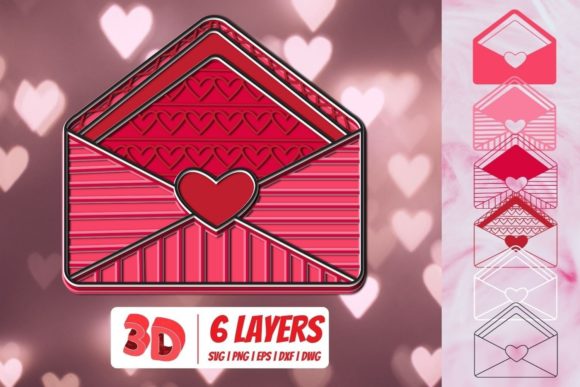
The effectiveness of any creative project begins with the quality and flexibility of its source files. The 3D Envelope Valentine is delivered as a comprehensive zipped folder containing four distinct file formats: SVG, DXF, PNG, and EPS. Each format serves a specific purpose within the design-to-production workflow, ensuring compatibility across various software ecosystems and user skill levels.
- SVG (Scalable Vector Graphics): This is the primary format for modern cutting machines. It allows for infinite scaling without loss of quality, making it ideal for intricate designs. The SVG file is fully compatible with Cricut Design Space, Silhouette Designer Edition, Make the Cut (MTC), Sure Cuts A Lot (SCAL), and Brother Scan and Cut's "Canvas" software. For professionals using these platforms, this ensures that every fold line and cut path is rendered with precision.
- DXF (Drawing Exchange Format): Designed specifically for users of Silhouette Basic Edition, the DXF format provides the necessary vector data for those who do not require the advanced features of the Designer Edition. This accessibility ensures that budget-conscious creators can still produce high-quality results without upgrading their software suite.
- EPS (Encapsulated PostScript): As a standard vector format for professional graphic design, the EPS file is essential for users working in CorelDraw, Inkscape, and Adobe Illustrator. This allows designers to manipulate the envelope's geometry, adjust colors, integrate custom branding elements, or scale the design for larger production runs before sending it to a cutter.
- PNG (Portable Network Graphics): Included as a photo file with a transparent background at 300 DPI, the PNG serves as a visual reference or a print-ready image for non-vector workflows. It is particularly useful for previewing the final aesthetic or for printing via standard inkjet or laser printers if a cutting machine is unavailable.
The inclusion of these varied formats demonstrates a commitment to usability. By providing multiple pathways for execution, the 3D Envelope Valentine removes technical barriers, allowing the focus to remain on strategy and execution rather than file conversion issues.
Strategic Applications Beyond Holiday Greetings
While the name implies a seasonal use case, the underlying mechanics of the 3D Envelope Valentine offer utility far beyond February 14th. For marketers and business owners, the concept of a "pop-up" element introduces a layer of surprise and delight that static cards cannot achieve. When a recipient opens a flat card, the interaction is predictable. When they open a 3D structure, the experience becomes memorable.
This memorability is crucial for branding. A well-executed 3D Envelope Valentine can serve as a direct response tool in a marketing campaign. Imagine a real estate agent sending a 3D envelope featuring a miniature model of a property, or a boutique sending a layered pop-up invitation for a new collection launch. The extra effort required to assemble the 3D structure signals care and attention to detail, qualities that transfer positively to the brand's perception.
For educators and content creators, the 3D Envelope Valentine acts as a pedagogical tool. It combines geometry, spatial reasoning, and fine motor skills. Students can learn about vectors, angles, and structural integrity while creating a functional object. This hands-on approach reinforces learning outcomes better than passive consumption of information, making it a valuable resource for STEM education projects or art curricula.
Planning for Production and Quality Control
Successful implementation of the 3D Envelope Valentine requires a methodical approach to planning. Before initiating production, whether for a single gift or a bulk order, one must consider the material properties and the cutting environment. Different paper weights behave differently when folded; too heavy, and the layers may not align correctly; too light, and the structure may lack stability.
A critical step in the process is the pre-flight check. When importing the SVG or DXF files into your cutting software, verify that all paths are closed and that the cut lines are distinct from score lines. In the context of the 3D Envelope Valentine, scoring is often just as important as cutting. Without proper scoring, the paper will resist folding, leading to jagged edges or cracked surfaces that detract from the final presentation. Most modern software allows for dual-line settings, where one line cuts through the material and another scores it lightly.
For entrepreneurs considering this for commercial purposes, scalability is a key factor. While hand-cutting works for personalized gifts, producing hundreds of units requires a streamlined workflow. Utilizing the EPS file in Adobe Illustrator to create a master template can significantly reduce setup time. Furthermore, establishing a consistent testing protocol is vital. Always run a test cut on scrap material to ensure the blade depth and pressure are calibrated correctly for the specific paper stock being used.
Risks and Mitigation Strategies
No creative tool is without potential pitfalls. The primary risk associated with the 3D Envelope Valentine lies in over-engineering or misalignment. If the internal mechanisms are too complex relative to the paper strength, the structure may collapse during shipping or handling. This is a common issue when attempting to replicate complex 3D models without accounting for material fatigue.
Another significant risk is the assumption that the digital file translates perfectly to the physical world without adjustment. Software rendering differs from physical reality. Factors such as humidity, temperature, and the age of the paper stock can affect how the 3D form behaves. Ignoring these variables can lead to wasted materials and frustrated recipients. To mitigate this, always conduct a pilot batch. Produce five to ten units, evaluate their durability, and refine the design parameters before committing to a larger run.
Additionally, relying solely on automation without human oversight can compromise quality. While the 3D Envelope Valentine simplifies the creation process, the final assembly often benefits from manual inspection. Ensuring that flaps adhere properly and that the 3D elements pop up as intended adds a layer of polish that automated processes might miss.
Intentional Use for Long-Term Value
To truly maximize the impact of the 3D Envelope Valentine, it must be approached with intentionality rather than randomness. Randomly distributing generic designs dilutes the message. Instead, align the design with specific goals. If the goal is to increase social media engagement, encourage recipients to share photos of their opened envelopes by including a subtle call to action or a hashtag on the exterior.
If the goal is to improve customer loyalty, personalize the interior message or add a QR code that leads to exclusive content. The 3D aspect serves as the hook, but the strategic content within drives the desired outcome. This thoughtful integration transforms a simple craft project into a sophisticated communication channel.
Furthermore, consider the environmental implications of your production choices. Using sustainable paper stocks and minimizing waste during the cutting process aligns the 3D Envelope Valentine with modern ethical standards. Consumers increasingly value brands that demonstrate responsibility, and incorporating eco-friendly practices into your creative output reinforces this alignment.
Conclusion: A Tool for Strategic Creativity
The 3D Envelope Valentine is a versatile resource that bridges the gap between digital design and physical craftsmanship. With support for major cutting software like Cricut, Silhouette, and Brother, along with professional tools like Illustrator and CorelDraw, it offers flexibility for users at every level of expertise. However, its true power is unlocked only when used strategically.
By understanding the technical nuances of the provided file formats, planning meticulously for production challenges, and aligning the final product with clear objectives, creators can achieve superior results. Whether enhancing a personal connection, educating a student, or strengthening a brand identity, the 3D Envelope Valentine stands as a testament to the enduring value of thoughtful, high-quality design. Approach it not merely as a template to be filled, but as a strategic instrument to be wielded with precision and purpose.