Zebra 3D Text Effect: Realistic Design Presentation
In the crowded digital landscape, grabbing attention requires more than just bold colors or catchy slogans. It demands a visual hook that stops the scroll and holds the eye. This is where the Zebra 3D Text Effect transforms from a simple graphic element into a powerful tool for brand communication. Unlike flat typography that often gets lost in a sea of content, this effect introduces depth, texture, and a tactile quality that mimics real-world materials. It creates an immediate sense of presence, making your message feel substantial and tangible.
The appeal of this design asset lies in its ability to bridge the gap between digital screens and physical perception. When you apply the Zebra 3D Text Effect, you are not merely adding a shadow or a gradient; you are constructing a visual narrative. The interplay of light and shadow on the simulated surfaces gives the text a weight that feels grounded, while the distinctive patterns add a layer of personality that standard fonts simply cannot replicate. For designers, marketers, and content creators, this effect offers a shortcut to high-end production value without the steep learning curve typically associated with 3D modeling software.
Visual Personality and Design Characteristics
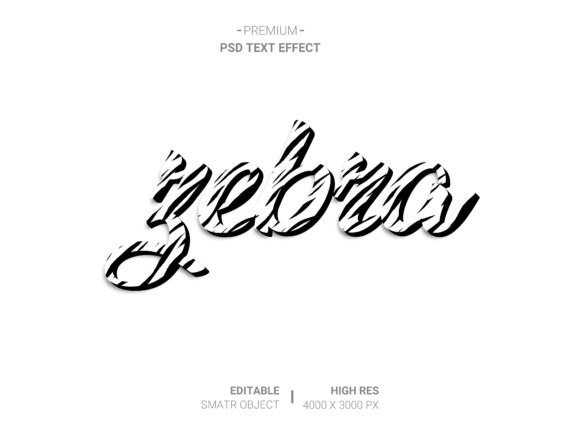
The Zebra 3D Text Effect is defined by its dynamic contrast and structural integrity. Visually, it combines the sharpness of modern typography with the organic flow of natural textures. The "zebra" aspect suggests a striking pattern of alternating tones, which adds rhythm and movement to static text. When rendered in three dimensions, these patterns wrap around the letterforms, creating a sense of curvature and volume that draws the viewer in.
This style is far from generic. It carries a personality that is both edgy and sophisticated. Depending on how you manipulate the lighting and material settings within the template, the text can appear sleek and metallic, rugged and textured, or soft and fabric-like. This versatility allows the effect to adapt to various brand voices. A luxury fashion brand might use a high-gloss version to convey exclusivity, while a streetwear label could opt for a matte, distressed finish to emphasize authenticity and grit.
The realism is achieved through careful attention to detail. Shadows are cast with precision, highlights catch the edges of the letters, and the surface texture responds to the imagined light source. This level of fidelity ensures that the text does not look like a cheap sticker pasted onto an image. Instead, it looks like an integral part of the composition, sitting naturally within the environment. For projects requiring a premium look, this attention to realistic rendering is often the deciding factor between a professional output and an amateur one.
Strategic Applications Across Industries
Where does this type of display font truly shine? The answer spans a wide array of creative and commercial sectors. In logo design, the Zebra 3D Text Effect can serve as a centerpiece, providing the necessary impact to make a brand memorable. Because the effect adds significant visual weight, it works exceptionally well for headlines, signage, and large-format displays where legibility at a distance is crucial.
For packaging design, the tactile illusion created by the 3D effect can influence consumer perception. A product box featuring text with this effect appears more robust and valuable, potentially justifying a higher price point. Similarly, in editorial design and publishing, using this effect for chapter titles or feature headers breaks up the monotony of body text and guides the reader's eye through the layout. It acts as a visual anchor, establishing a hierarchy that makes complex information easier to digest.
Digital platforms also benefit immensely from this approach. In web design, animated versions of the Zebra 3D Text Effect can create engaging hero sections that invite interaction. On social media, where users skim content rapidly, the depth and contrast provided by this effect ensure that graphics stand out against the clutter of feeds. Whether you are creating thumbnails for video content, promotional banners for email marketing, or assets for a mobile app, the consistent application of this style builds a cohesive brand identity.
Streamlined Workflow and Practical Implementation
One of the most significant advantages of utilizing the Zebra 3D Text Effect via smart object templates is the elimination of technical barriers. Traditionally, achieving this level of realism required hours of manual work in advanced 3D software, involving complex lighting setups and texture mapping. However, modern design workflows have democratized this process.
The workflow is designed for efficiency and accessibility. You start with a fully layered, well-organized PSD file. All the heavy lifting—shadows, gradients, texture maps, and blending modes—is pre-configured. To customize the design, you simply double-click the designated smart object layer. This action opens a new window where you can paste your own artwork or text. Once you save and close that window, the main document automatically updates, applying all the 3D effects, lighting, and textures to your new content instantly.
This method ensures consistency across multiple projects. If you need to create a series of social media posts or a set of packaging mockups, you can swap out the text in seconds while maintaining the exact same visual standards. There is no need to manually adjust drop shadows or recalculate lighting angles for every single variation. The system handles the complexity, allowing you to focus on the creative strategy and messaging.
Evaluating Project Fit and Typography Pairing
While the Zebra 3D Text Effect is powerful, it is not a universal solution for every design challenge. Its strength lies in being a display typeface rather than a body text font. Using it for long paragraphs of reading material would be overwhelming and detrimental to readability. Instead, reserve it for short phrases, headlines, and key messages where impact is prioritized over density.
When selecting this effect for a project, consider the existing visual language of your brand. Does the zebra pattern clash with your current imagery, or does it complement it? The best results come from thoughtful font pairing. Since the Zebra 3D Text Effect is visually dominant, it pairs beautifully with clean, understated sans serif fonts for supporting text. This contrast ensures that the headline grabs attention while the body copy remains legible and unobtrusive.
Before committing to a final design, always test the effect in context. View the mockup at different sizes and resolutions. Check how the text performs against busy backgrounds versus solid colors. Ensure that the contrast levels remain sufficient for accessibility standards. By evaluating the fit early in the process, you avoid costly revisions later and ensure that the final output resonates with your target audience.
Maximizing Value Through Commercial Licensing
For entrepreneurs and small business owners, understanding the licensing terms is critical. The Zebra 3D Text Effect is available as a commercial font asset, meaning you can use it in client work, products for sale, and marketing campaigns without worrying about legal repercussions. This flexibility is essential for agencies managing multiple clients or brands launching new product lines.
The inclusion of high-resolution files further enhances the value proposition. Whether you are printing a massive billboard or displaying a crisp icon on a smartphone screen, the quality remains intact. The fully layered nature of the files also means you have the freedom to tweak individual elements if your specific project requirements demand it. You are not locked into a rigid preset; you have the tools to refine the look until it perfectly matches your vision.
In conclusion, the Zebra 3D Text Effect represents a convergence of artistic flair and practical utility. It empowers creators to produce stunning, realistic designs quickly and efficiently. By leveraging this tool, you elevate the perceived value of your work, strengthen your brand recognition, and communicate your message with greater authority. Whether you are a seasoned designer or a hobbyist looking to improve your craft, integrating this effect into your toolkit is a strategic move that pays dividends in visual impact and professional polish.